أفضل 10 طرق لربح المال من مدونات بلوجر


hama


 47 km north of Homs, 209 km north from Damascus lies Hama that, in the past, enjoyed a reputation as one of the more charming of the Syrian towns, more successful than most in making of its environment a pleasant and picturesque setting through the use of the Orontes as the city's lungs and cooling device.
History:
Hama citadel hill which you will find to the north west of the center of the city (today a park crowns the summit) has been exhaustively researched over the years, particularly by a Danish expedition. Traces have been found of all periods as far back as the Neolithic, including the 11th century BC, when Hama was the center of the small Syro-Hittite or Aramean kingdom of Hamath. Some of the evidence is now on display in the museum.
The city was destroyed by Assyrians in 720 and, like the rest of Syria, came under Assyrian and Persian rule. Then the Seleucids established their presence after 200 BC and renamed the city Epiphania after one of their foremost rulers, Antiochos IV Epiphanes. It remained a center of Roman and Byzantine administration, falling to Arabs by capitulation in 636 - 7.
The Ayyūbid period was particularly prosperous and saw the construction of the first of the existing norias (the enormous wooden water wheels), reconditioned and supplemented in the Mameluke and Ottoman periods. During 16th century and from the 18th century, Hama was under Damascus control in an effort to maximize the returns from the pilgrimage - hence the strong link between the two towns through the Azem family.
The Norias:
The town has 17 norias in the center of town, in the Orontes pushing water when it's weakly flowing. The great wheels, up to 20 m in diameter, were designed to raise water from the Orontes. The river's flow is channeled by a dam into a sluice which drives the wheel. This raises the wheel's wooden box devices that trap water and discharge it at the top of its rotation into towers at the side. From the towers, the water flowed through stone aqueducts into the town or surrounding agricultural areas, each consumer being allocated a portion of the flow over a period of time. Hama specialized in these devices since the Byzantine times. The largest example is the central group named al-Mamuriye and dates from 1453 (Mamelukes period).
The Museum:
Watching the museum will be educating because of its contents, Bronze Ages and Iron Age through to the Ayyūbid and Mameluke periods. This museum is housed in the Hama Beit Azem (Azem Palace), the 18th century mansion of a former wali (governor) of Hama, Assaad Pasha al-Azem (1705 - 57, wali of Hama pre-1742 and of Damascus in 1743 - 57). The collection of objects is displayed in a number of rooms in addition to the Roman and Christian remains found in the lower courtyard. Particularly worthy of note is the mosaic of Mariamin (west of Homs, in the edge of the Jebel Ansariye). The work is from the last quarter of the 4th century.
Mosque al- Nūri:
North of Beit Azem, the Mosque al-Nūri stands on a square where a small bridge crosses the Orontes. It was completed in 1163 by Nūr al-Din the Zengid. The admirable minaret, banded with black basalt and yellow limestone, is original. The minbar (tribune) within (12th century), a gift of Nūr al Din, is worth noting. There are other remarkable mosques to visit: Mosque al-Izzi, Mosque and Mausoleum of Abu al-Fida and the Great Mosque of Hama.
Khans:
There are two Ottoman khans to be seen. The 1556 Khan Rustum Pasha has large courtyard, vaulted arcades on four sides and the central mosque. And the huge façade of the Khan Assaad Pasha (1738) also resemble to the former, both being restored by the Ministry of Tourism.
47 km north of Homs, 209 km north from Damascus lies Hama that, in the past, enjoyed a reputation as one of the more charming of the Syrian towns, more successful than most in making of its environment a pleasant and picturesque setting through the use of the Orontes as the city's lungs and cooling device.
History:
Hama citadel hill which you will find to the north west of the center of the city (today a park crowns the summit) has been exhaustively researched over the years, particularly by a Danish expedition. Traces have been found of all periods as far back as the Neolithic, including the 11th century BC, when Hama was the center of the small Syro-Hittite or Aramean kingdom of Hamath. Some of the evidence is now on display in the museum.
The city was destroyed by Assyrians in 720 and, like the rest of Syria, came under Assyrian and Persian rule. Then the Seleucids established their presence after 200 BC and renamed the city Epiphania after one of their foremost rulers, Antiochos IV Epiphanes. It remained a center of Roman and Byzantine administration, falling to Arabs by capitulation in 636 - 7.
The Ayyūbid period was particularly prosperous and saw the construction of the first of the existing norias (the enormous wooden water wheels), reconditioned and supplemented in the Mameluke and Ottoman periods. During 16th century and from the 18th century, Hama was under Damascus control in an effort to maximize the returns from the pilgrimage - hence the strong link between the two towns through the Azem family.
The Norias:
The town has 17 norias in the center of town, in the Orontes pushing water when it's weakly flowing. The great wheels, up to 20 m in diameter, were designed to raise water from the Orontes. The river's flow is channeled by a dam into a sluice which drives the wheel. This raises the wheel's wooden box devices that trap water and discharge it at the top of its rotation into towers at the side. From the towers, the water flowed through stone aqueducts into the town or surrounding agricultural areas, each consumer being allocated a portion of the flow over a period of time. Hama specialized in these devices since the Byzantine times. The largest example is the central group named al-Mamuriye and dates from 1453 (Mamelukes period).
The Museum:
Watching the museum will be educating because of its contents, Bronze Ages and Iron Age through to the Ayyūbid and Mameluke periods. This museum is housed in the Hama Beit Azem (Azem Palace), the 18th century mansion of a former wali (governor) of Hama, Assaad Pasha al-Azem (1705 - 57, wali of Hama pre-1742 and of Damascus in 1743 - 57). The collection of objects is displayed in a number of rooms in addition to the Roman and Christian remains found in the lower courtyard. Particularly worthy of note is the mosaic of Mariamin (west of Homs, in the edge of the Jebel Ansariye). The work is from the last quarter of the 4th century.
Mosque al- Nūri:
North of Beit Azem, the Mosque al-Nūri stands on a square where a small bridge crosses the Orontes. It was completed in 1163 by Nūr al-Din the Zengid. The admirable minaret, banded with black basalt and yellow limestone, is original. The minbar (tribune) within (12th century), a gift of Nūr al Din, is worth noting. There are other remarkable mosques to visit: Mosque al-Izzi, Mosque and Mausoleum of Abu al-Fida and the Great Mosque of Hama.
Khans:
There are two Ottoman khans to be seen. The 1556 Khan Rustum Pasha has large courtyard, vaulted arcades on four sides and the central mosque. And the huge façade of the Khan Assaad Pasha (1738) also resemble to the former, both being restored by the Ministry of Tourism.
History


History of Palmyra


مدينة تدمر الأثرية






منح دراسية للأجانب لعام 2016
Site of Palmyra


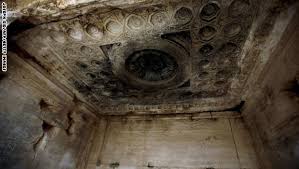
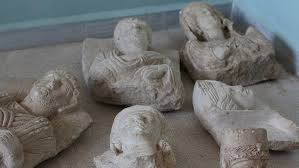
 An oasis in the Syrian desert, north-east of Damascus, Palmyra contains the monumental ruins of a great city that was one of the most important cultural centres of the ancient world. From the 1st to the 2nd century, the art and architecture of Palmyra, standing at the crossroads of several civilizations, married Graeco-Roman techniques with local traditions and Persian influences. Outstanding Universal Value Brief synthesis An oasis in the Syrian desert, north-east of Damascus, Palmyra contains the monumental ruins of a great city that was one of the most important cultural centres of the ancient world. From the 1st to the 2nd century, the art and architecture of Palmyra, standing at the crossroads of several civilizations, married Graeco-Roman techniques with local traditions and Persian influences. First mentioned in the archives of Mari in the 2nd millennium BC, Palmyra was an established caravan oasis when it came under Roman control in the mid-first century AD as part of the Roman province of Syria. It grew steadily in importance as a city on the trade route linking Persia, India and China with the Roman Empire, marking the crossroads of several civilisations in the ancient world. A grand, colonnaded street of 1100 metres' length forms the monumental axis of the city, which together with secondary colonnaded cross streets links the major public monuments including the Temple of Ba'al, Diocletian's Camp, the Agora, Theatre, other temples and urban quarters. Architectural ornament including unique examples of funerary sculpture unites the forms of Greco-roman art with indigenous elements and Persian influences in a strongly original style. Outside the city's walls are remains of a Roman aqueduct and immense necropolises. Discovery of the ruined city by travellers in the 17th and 18th centuries resulted in its subsequent influence on architectural styles. Criterion (i): The splendour of the ruins of Palmyra, rising out of the Syrian desert north-east of Damascus is testament to the unique aesthetic achievement of a wealthy caravan oasis intermittently under the rule of Rome from the Ier to the 3rd century AD. The grand colonnade constitutes a characteristic example of a type of structure which represents a major artistic development. Criterion (ii): Recognition of the splendour of the ruins of Palmyra by travellers in the 17th and 18th centuries contributed greatly to the subsequent revival of classical architectural styles and urban design in the West. Criterion (iv): The grand monumental colonnaded street, open in the centre with covered side passages, and subsidiary cross streets of similar design together with the major public buildings, form an outstanding illustration of architecture and urban layout at the peak of Rome's expansion in and engagement with the East. The great temple of Ba'al is considered one of the most important religious buildings of the 1st century AD in the East and of unique design. The carved sculptural treatment of the monumental archway through which the city is approached from the great temple is an outstanding example of Palmyrene art. The large scale funerary monuments outside the city walls in the area known as the Valley of the Tombs display distinctive decoration and construction methods. Integrity (2009) All the key attributes, including the main colonnaded street, major public buildings and funerary monuments, lie within the boundary. The tower tombs and the citadel are vulnerable to minor earthquakes and lack of conservation. Since the time of inscription, the population of the adjacent town has increased and is encroaching on the archaeological zone. Although traffic has increased, the main road that passed through the site has been diverted. Increased tourism has brought pressure for facilities within the property. Authenticity (2009) The key attributes display well their grandeur and splendour. However the setting is vulnerable to the encroachment of the adjacent town that could impact adversely on the way the ruins are perceived as an oasis closely related to their desert surroundings. Protection and management requirements (2009) The site was designated a national monument and is now protected by the National Antiquities law 222 as amended in 1999. A buffer zone was established in 2007 but has not yet been submitted to the World Heritage Committee. The regional strategic action plan currently under preparation is expected to provide guidelines to expand and redefine the site as a cultural landscape, with respect to the transitional zones around the archaeological site, the oasis and the city. There is an on-going need for a conservation and restoration plan to be developed that addresses fully the complex issues associated with this extensive multiple site and will allow for coordinated management, clear priorities and a cultural tourism strategy and
address the issues of expansion of the nearby town
An oasis in the Syrian desert, north-east of Damascus, Palmyra contains the monumental ruins of a great city that was one of the most important cultural centres of the ancient world. From the 1st to the 2nd century, the art and architecture of Palmyra, standing at the crossroads of several civilizations, married Graeco-Roman techniques with local traditions and Persian influences. Outstanding Universal Value Brief synthesis An oasis in the Syrian desert, north-east of Damascus, Palmyra contains the monumental ruins of a great city that was one of the most important cultural centres of the ancient world. From the 1st to the 2nd century, the art and architecture of Palmyra, standing at the crossroads of several civilizations, married Graeco-Roman techniques with local traditions and Persian influences. First mentioned in the archives of Mari in the 2nd millennium BC, Palmyra was an established caravan oasis when it came under Roman control in the mid-first century AD as part of the Roman province of Syria. It grew steadily in importance as a city on the trade route linking Persia, India and China with the Roman Empire, marking the crossroads of several civilisations in the ancient world. A grand, colonnaded street of 1100 metres' length forms the monumental axis of the city, which together with secondary colonnaded cross streets links the major public monuments including the Temple of Ba'al, Diocletian's Camp, the Agora, Theatre, other temples and urban quarters. Architectural ornament including unique examples of funerary sculpture unites the forms of Greco-roman art with indigenous elements and Persian influences in a strongly original style. Outside the city's walls are remains of a Roman aqueduct and immense necropolises. Discovery of the ruined city by travellers in the 17th and 18th centuries resulted in its subsequent influence on architectural styles. Criterion (i): The splendour of the ruins of Palmyra, rising out of the Syrian desert north-east of Damascus is testament to the unique aesthetic achievement of a wealthy caravan oasis intermittently under the rule of Rome from the Ier to the 3rd century AD. The grand colonnade constitutes a characteristic example of a type of structure which represents a major artistic development. Criterion (ii): Recognition of the splendour of the ruins of Palmyra by travellers in the 17th and 18th centuries contributed greatly to the subsequent revival of classical architectural styles and urban design in the West. Criterion (iv): The grand monumental colonnaded street, open in the centre with covered side passages, and subsidiary cross streets of similar design together with the major public buildings, form an outstanding illustration of architecture and urban layout at the peak of Rome's expansion in and engagement with the East. The great temple of Ba'al is considered one of the most important religious buildings of the 1st century AD in the East and of unique design. The carved sculptural treatment of the monumental archway through which the city is approached from the great temple is an outstanding example of Palmyrene art. The large scale funerary monuments outside the city walls in the area known as the Valley of the Tombs display distinctive decoration and construction methods. Integrity (2009) All the key attributes, including the main colonnaded street, major public buildings and funerary monuments, lie within the boundary. The tower tombs and the citadel are vulnerable to minor earthquakes and lack of conservation. Since the time of inscription, the population of the adjacent town has increased and is encroaching on the archaeological zone. Although traffic has increased, the main road that passed through the site has been diverted. Increased tourism has brought pressure for facilities within the property. Authenticity (2009) The key attributes display well their grandeur and splendour. However the setting is vulnerable to the encroachment of the adjacent town that could impact adversely on the way the ruins are perceived as an oasis closely related to their desert surroundings. Protection and management requirements (2009) The site was designated a national monument and is now protected by the National Antiquities law 222 as amended in 1999. A buffer zone was established in 2007 but has not yet been submitted to the World Heritage Committee. The regional strategic action plan currently under preparation is expected to provide guidelines to expand and redefine the site as a cultural landscape, with respect to the transitional zones around the archaeological site, the oasis and the city. There is an on-going need for a conservation and restoration plan to be developed that addresses fully the complex issues associated with this extensive multiple site and will allow for coordinated management, clear priorities and a cultural tourism strategy and
address the issues of expansion of the nearby town
Palmyra. The new village. Substituting the old village formerly in temple courts Repository Library of Congress USA

パルミラの遺跡
 パルミラは1~3世紀の間、ギリシャ・ローマの西方文化とパルティア・ペルシアなどの東方文化の接点として栄えたシルクロードの隊商都市。18世紀以降の調査によって、石灰岩でつくられた広大な都市の全体像が明らかにされた。メーンストリートの列柱道路は、幅11m、長さ1.2kmにわたって375本もの石柱を並べた壮大なものである。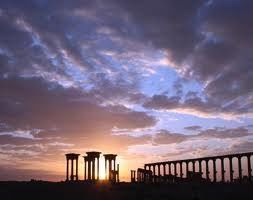
Subscribe to:
Comments (Atom)